
Summary
- A one-page site works for new businesses with one main service.
- It limits you when you need to rank for several services or towns.
- Six sections cover what a stranger needs to see.
- Five signs tell you it's time for a full website.
The Short Answer
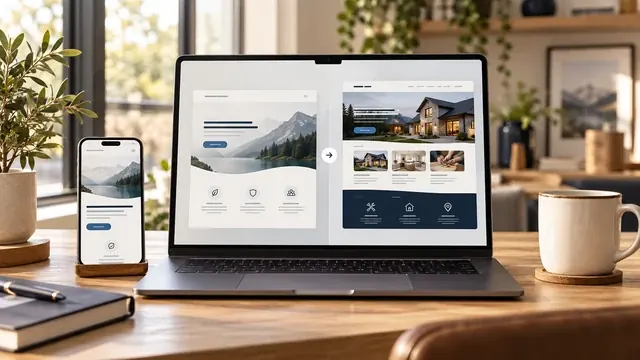
A one-page website is enough when your business is new, you offer one main service and most visitors already know your name. It stops being enough when you need to be found for several services or towns.
Think of it as a strong first step, not a permanent home.
When a One-Page Website Works
A one-page site works best when its job is to confirm, not to attract.
| Situation | One page works? | Why |
|---|---|---|
| You just opened and need to look legitimate | Yes | People who hear about you need to confirm you're real |
| You offer one main service in one area | Yes | One page can explain one thing clearly |
| You send people to the site from ads or business cards | Yes | A focused page converts well |
| You offer several different services | Limited | Each service needs room to be explained and found |
| You want to rank for searches in several towns | No | One page can't target many searches well |
| You have dozens of projects to show | No | A single gallery section gets crowded and slow |
What a One-Page Website Must Include
If you go with one page, every section has to earn its place, and these six cover what a stranger needs.
- A clear promise: your service and your area, at the top.
- Your services, briefly, so visitors know if you're a fit.
- Proof: a few reviews or photos of real work.
- A short introduction to you, with a real photo.
- Answers to the four or five questions every customer asks.
- A contact section with a form, phone number and hours.
Where a One-Page Website Limits You
The biggest limit of a one-page site is search: one page can only be about a few things.
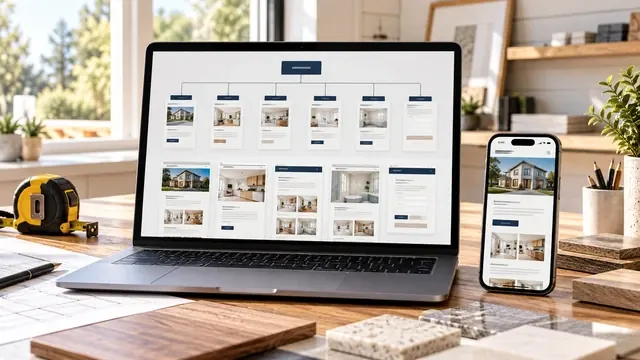
Google matches searches to pages. If you do kitchens, bathrooms and decks, one page can't be the best answer for all three searches. The same goes for different towns. That's when separate pages pay off.
Signs It's Time to Upgrade
Watch for these signs; one or two of them usually mean a full website will pay for itself.
- Customers ask about services that aren't on your page.
- Competitors appear for your services on Google; you appear only for your name.
- Your best photos no longer fit.
- You want to show you work in more towns.
- Your page has grown so long that visitors stop scrolling.
Compare Before You Decide
If you're unsure, compare the two options side by side in landing page vs website. And if you just opened, our 30-day plan for new business online presence shows where a one-page site fits.
Key Terms in Plain English
These are the terms used in this guide, each explained in one sentence, the same way we explain them on our calls.
- Landing page
- A single web page built for one goal, such as getting quote requests, instead of a full site with many pages.
- SEO (search engine optimization)
- The work of making your website easy for Google and Bing to understand, trust and show for the searches your customers make.
- Keyword research
- Finding the exact words your customers type into Google when they look for your service, so your pages use those same words.
- Call to action
- The button or link that tells a visitor what to do next, such as calling you or requesting a quote.
Frequently Asked Questions
These are the questions owners ask us most about this topic.
Can a one-page website rank on Google?
It can rank for your business name and sometimes one main service. Ranking for several services or towns usually needs separate pages.
How much does a one-page website cost?
At Ethos, our landing page costs $800, paid once. Builder plans cost less upfront but charge every month.
Is a one-page website good for SEO?
It can have good technical SEO, but it has limited room for the content that ranks for many searches.
Can I add pages to a one-page website later?
Yes. A well-built one-page site can grow into a full website when your business needs it.
What's the difference between a one-page website and a landing page?
They're often the same thing for a small business: a single page with one goal, usually getting a call or a form.