
Summary
- Six kinds of pages cover most service businesses.
- Give each main service its own page; that's what gets found.
- Seven pages is a solid structure for many businesses.
- Put your best reviews on service pages, not only on a reviews page.
The Short Answer
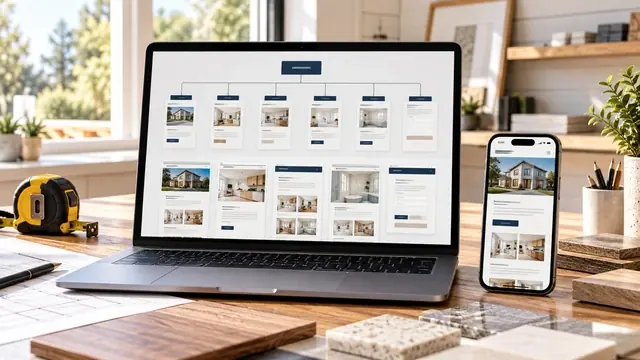
Most service business websites need six kinds of pages: home, one page per main service, about, a gallery, reviews and contact. The service pages matter most, because they're the ones that get found.
You don't need a long site. You need the right pages, each with one clear job.
The Essential Pages and What Each One Does
Each page answers a different question a customer has before calling you.
| Page | Its job | What it must include |
|---|---|---|
| Home | Tell a stranger in 5 seconds what you do and where | Your main service, your area, one proof and one button |
| One page per main service | Match each service to the searches for it | What's included, photos, process, FAQ and a quote form |
| About | Show the people behind the business | Your story, a real photo, experience and languages spoken |
| Gallery or projects | Prove the quality of your work | Before and after photos organized by service |
| Reviews | Let past customers do the selling | Real reviews, quoted exactly, with names as published |
| Contact page | Make it effortless to reach you | Phone, form, hours, service area and response time |
Why Service Pages Matter Most
Service pages matter most because Google ranks pages, not businesses, and customers search for services, not company names.
Someone searching "bathroom remodeling in Charlotte" is far more likely to find a page about bathroom remodeling than a home page that lists ten services in one paragraph. Each main service deserves its own page, with its own photos and questions.
Example Structures for Three Businesses
Here's what the structure looks like for three very different service businesses.
| Remodeling contractor | Cleaning company | Hair salon |
|---|---|---|
| Home | Home | Home |
| Kitchen remodeling | Residential cleaning | Cuts and styling |
| Bathroom remodeling | Deep and move-out cleaning | Color and highlights |
| Basements and additions | Commercial cleaning | Treatments |
| Projects gallery | Pricing | Portfolio |
| About and reviews | About and reviews | Team and reviews |
| Free estimate | Book a cleaning | Book an appointment |
Pages You Can Add Later
Some pages help, but only once the essentials are working.
- A frequently asked questions section on each service page, rather than one big FAQ page.
- Project stories that explain one job from start to finish.
- A blog with guides that answer common customer questions.
- A careers page, if you're hiring.
- Privacy policy and terms, required if you collect information through forms.
Common Page Mistakes
Three mistakes appear on most small business sites we review.
- One page for everything, so no service ranks well.
- A gallery with no explanation, so visitors don't know which service each photo shows.
- A contact page with only a form, and no phone number or hours.
Before You Build
Once you know your pages, decide how to build them and gather the material.
If you're choosing between a builder and a designer, read Wix vs custom website. Then use our checklist on what to send a web designer to collect what each page needs.
Key Terms in Plain English
These are the terms used in this guide, each explained in one sentence, the same way we explain them on our calls.
- Call to action
- The button or link that tells a visitor what to do next, such as calling you or requesting a quote.
- Structured data (Schema.org)
- A small block of code in the Schema.org vocabulary that tells search engines and AI tools exactly what your business is, where it works and what it offers.
- Keyword research
- Finding the exact words your customers type into Google when they look for your service, so your pages use those same words.
- Landing page
- A single web page built for one goal, such as getting quote requests, instead of a full site with many pages.
Frequently Asked Questions
These are the questions owners ask us most about this topic.
How many pages should a small business website have?
Most service businesses do well with 6 to 12 pages: home, about, contact, gallery and one page per main service.
Do I need a separate page for each service?
For your main services, yes. Separate pages help customers find what they need and help Google match each search to the right page.
Is a one-page website enough?
It can be for a new business. Once you offer several services or want to be found for them, separate pages work better.
Do I need a blog on my business website?
Not at first. A blog helps when you can answer customer questions regularly, but service pages come first.
Should reviews have their own page?
A reviews page is fine, but the best reviews should also appear on the service pages, where customers decide.